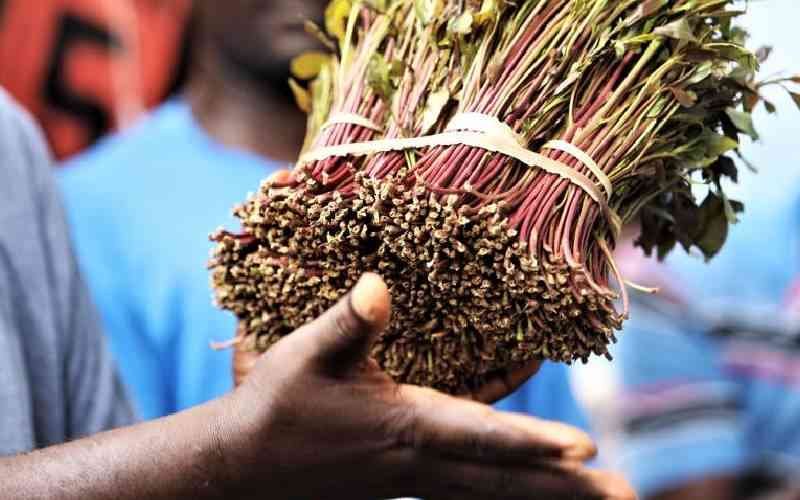
The Sala region, which lies in the northeastern part of Kenya, belonging to the Mandera District, has recently issued regulations forbidding the consumption and trade of khat. These regulations, issued by the local elders, clearly state that khat can neither be consumed nor sold within the town. Furthermore, no man who chews khat will be allowed to marry into a local family.
The elders further stated that those chewing khat shall not be given a funeral prayer, meaning that they shall not be prayed for should they find themselves in the unfortunate situation of death without having performed prayers. One of the community elders, Aden Dahiye Qoriyow, stated that the law does not affect those who pray but chew khat because they are always subject to advisement.
Khat is Banned
The elders of Sala declared khat as a vice that has terribly affected the youth, including school-going children and local families. The use of khat is common among the local school students, thereby negatively affecting their character and learning.
Additionally, local women have been heard complaining that men who chew khat do not assume responsibilities toward their families, neglecting their tasks and financially supporting their families. These complaints contributed to the community arriving at a collective resolution to enact the new laws.
Measures Put in Place to Enforce the Ban
Before announcing these directives, the elders of Sala spent four months conducting awareness campaigns. During this time, talk was done with khat vendors, and four women and one man who sold khat in the town agreed to stop trading in it and switch to other businesses.
Anyone caught rather obviously going against such rules shall undergo strict punishment including total social ostracism from the community.
Kenya and Khat Bans
The ban on khat is not exclusive to Sala. The governors of Mombasa, Kilifi, and Taita Taveta counties seem to have formally prohibited the selling and usage of khat-a specific type known as muguka-last year.
According to the governors, khat posed a threat to youth because of its supposedly harmful effects. The orders were rescinded, however, by Kenya’s president, William Ruto, who reasoned that muguka is legal and, therefore, could not be made illegal.
Muguka is a kind of khat usually taken in the coastal and northeastern regions of Kenya, popularly noted for its high stimulating property.
Effects of Khat
Khat holds two chemicals that excited the central nervous system through stimulation so that users feel more active and talkative. Conversely, it causes insomnia, confusion, and anxiety.
Beyond other effects, prolonged use of khat has been said to lead to mouth infections, dental problems, and higher chances of oral cancer.
Conclusion
The bylaws now being adopted in Sala are reflective of community support for the regulation of khat, especially in light of its effects on youth and families. While some regions have implemented outright bans on khat, the national government of Kenya has not yet undertaken a formal closure of khat markets.
The argument is heightened because Kenya has restrictive laws against khat in most towns, whereas there are some towns like Mukono, which have made khat hippies within preserve.
While some people plead that $0.50 for limited khat is exorbitant, others would say they would rather pay the price than see the conflict extend to youth drinks like alcohol or marijuana.