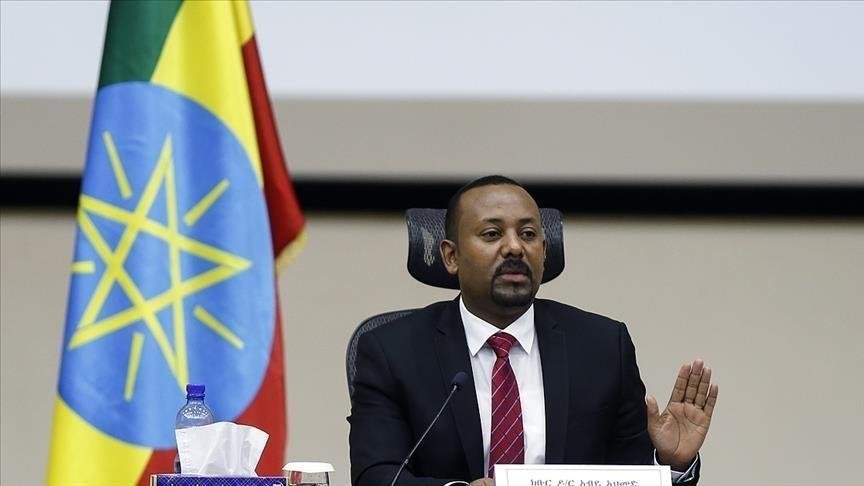
The Horn of Africa has been the center of geopolitical interest and tension for eons. Due to its position between the Red Sea and the Indian Ocean, this region generally has been in the site of political war for centuries. Therefore, since the advent of trading routes between the Red Sea and the Indian Ocean, this geopolitics have determined the policies of leadership in Ethiopia, where access to the Red Sea has long been a goal. From Emperor Menelik II onward to Prime Minister Abiy Ahmed, Ethiopia has been keen to pursue this ambition in its foreign policy.
The Ambitions of Menelik II and Red Sea Access
Pre-20th Century desires for Ethiopia to gain a foothold on the Red Sea are nested in the reign of Emperor Menelik II. Following the supreme victory of Ethiopian forces over Italy at the Battle of Adwa in 1896, Menelik led Ethiopia to strengthen its position at the world stage. In pursuit of that confirmation, Menelik’s enthusiasm toward the Red Sea for his country was spinning when he tried to establish ports for Ethiopia.
Menelik was instrumental in developing the trade routes from Ethiopia to the Red Sea through Djibouti in 1917. The idea had been to develop Djibouti as the main outlet for Ethiopian products while requesting France to open the route for commerce and military.
Haile Selassie and Naval Forces of Ethiopia
Under the reign of Emperor Haile Selassie in the mid-20th century, Ethiopia had a more established access to the Red Sea. Following the United Nations ruling in 1955 on integration of Eritrea and Ethiopia, the kingdom had a modified maritime system with resultantly effective naval forces based at Massawa, which would work to secure Ethiopia’s interests on maritime grounds.
In 1969, Haile Selassie visited the United States to seek military support for Ethiopia, as he believed that both the Soviet Union and Arab nations were posing serious dangers to Ethiopia, along with regional tensions between Ethiopia and Somalia. This set in motion a different course wherein Ethiopia increasingly began to regard access to the Red Sea as important for its survival and future liveliness.
Mengistu Haile Mariam and the Red Sea Ports
Leadership ambitions to control the Red Sea ports continued to thrive under Mengistu Haile-Mariam-era Derg rule. Mengistu ruled from 1977 to 1991, during which he sought to retake the Casab Port in Eritrea. His revolutionary government intensified the military business position for the interests of Ethiopia within Eritrea along the Red Sea coastline. This, however, turned into a nasty affair, as the Eritreans fought hard for independence from Ethiopia, which was secured in 1991.
Thus, losing Eritrean ports meant that landlocked Ethiopia would be faced with a menace-another blow to its trade and military ambitions in the region-and henceforth commanded a very high reliance over the port of Djibouti to serve as the gateway for over 90% of its trade.
Abiy Ahmed and the Renewed Push for Red Sea Access
When Abiy Ahmed took charge of the government in Ethiopia in 2018, he inherited Ethiopia’s ambitions concerning access to the Red Sea. The first Oromo leader of Ethiopia, Abiy inherited the shadow of Menelik II, Haile Selassie, and Mengistu-all of whom had aspired to gain control of the strategic Red Sea ports.
A military cooperation agreement was signed by Ethiopia and France in 2019 during the rule of Abiy Ahmed, the first step toward developing Ethiopia’s naval capabilities. Abiy spoke quite openly of Ethiopia’s need to have access to the Red Sea, saying in October 2020 to the Ethiopian parliament that the very survival of the country depended upon being able to access maritime routes.
In 2023, Ethiopia struck a controversial deal with Somaliland to have a military base and a commercial port in Lughaya. A deal that has attracted controversy and tension in the Horn of Africa. Somalia had raised concerns regarding Ethiopia’s aspirations, regarding the deal as a breach of its sovereignty.
The Future of Ethiopia’s Red Sea Ambitions
Ethiopia’s desires for Red Sea access surround the economy, military, influence, and consequent sustainability of the country. Abiy Ahmed’s quest for maritime access depicts that the battle for having control over this waterway [Red Sea] considers centuries of historical struggle.
Though Ethiopia, being landlocked, encounters many barriers to protecting its maritime interests, the country’s leadership has worked to lay a strong foundation and pursue that commitment. Northwest of the Indian Ocean, the Red Sea access quest will always remain a central theme in the country’s foreign policy and vision for the future as Ethiopia tries to weave through complex inter-regional dynamics. The future developments, like the agreements with Somaliland and possible alliances, will be vital in determining the geopolitical landscape of the Horn of Africa in the next few years.